Showing posts with label linguistics. Show all posts

Thursday, May 28, 2015

Character of the Week: Maria from The Writer/the Loving Her series

Despite the age gap, Maria Lopez blends right in with the rest of the crew from the Loving Her series.


Maria hails from Puerto Rico. She was raised on the tropical island, and her original home was always something that held a deep meaning to her. As an older child (at the age of 12), her family came to the States, and they settled in California.


She adjusted well to her new life in America. It was a whole new world, and it was all very exciting and intriguing to the young girl. Maria's life was full of both cultures and both languages. She embraced all that was American, while still following her Puerto Rican traditions.


She was a good student. She saw and understood the unlimited potential she had if she applied herself in school. She worked diligently in all of her classes, but she especially excelled in linguistics.


She went off to Pepperdine University for her degree in journalism. She was the first college graduate in her family; she did her best to help support her other family members.


As a young professional, She attended a writing conference where she met a wonderful woman named Adelaide. The two hit it off immediately. They spent a fair amount of time together during the conference, and a friendship had been forged.


The two remained in contact with each other for quite a while.

One day, Adelaide informed Maria of a wonderful job opportunity with her. The only problem was that the position was in Philadelphia. It was a difficult decision. It was the job opportunity of a lifetime, but it would mean a separation from her family. Maria brought her dilemma to the family, to see what they thought. Her parents - and everyone around her - were all very supportive of the job.


So with some excitement, along with trepidation, Maria moved to the East Coast.


Out of kindness, Adelaide offered her home to Maria. The two lived and worked together. Maria loved her new job. She and Adelaide were great roommates, and everything seemed to be perfect.


After months of living together, Adelaide confessed  her love to Maria. Maria being the unflappable woman that she is, admitted that she had deep feelings for Adelaide as well. They were slightly backwards from most couples as they started living together before they started "dating."


The relationship went well. Considering it was the early 1980s, though, there was fear of being found out. Maria seamlessly transitioned to working for the Hispanic sister publication of Adelaide's.


Their life played out beautifully, until Adelaide got leukemia. She died thirteen years prior to when Maria's story begins.


Her story begins as she drives in the city, with the sky turning an ominous shade of black, hinting at the storm to come.


Where we meet Maria is indeed a storm. It is a time of change - and even some upheaval. She leaves the job she's had for the last twenty five years. Not only is it a career change, in a way, she severs a tie to Addie.


She creates new friendships, and reconnects with old friends. Through all of which, she meets Stephania.


Stephania is unlike anyone Maria has ever met. She is young, pushy, outspoken, unique, and full of life. At first, she grates on the quiet, reserved Maria. Once Maria opens herself up to Steph, even in the smallest way, she wiggles her way right into Maria's heart.


The idea of dating someone - especially someone so much younger - is frightening to Maria. She never opened her heart up to anyone since Adelaide died. She was content in her solitude, and she felt obligated to Addie.


As things progress, Maria is excited, fearful, and terribly confused. She enjoys Stephania's company, and all that she has to offer. But she is afraid of the depth of the relationship. She hasn't felt anything like that in a very long time. And she is puzzled. She doesn't know if it's alright to fall in love with someone else. Was she being unfaithful to Adelaide? Would Adelaide approve? What was she supposed to do?


The beauty in all this is that Stephania gives Maria all the time and space she needs. When they take their first trip together to New York, Maria is a bag of nerves. Steph does her best to try to calm and distract Maria. When she comes out of the bathroom in a sensuous night gown, though, it proves to be too much. In a beautiful, tender moment, Stephania calls Maria over to her. Rather than seducing her, she simply embraces her, and lets Maria weep. That moment was the solidifying and defining moment in their relationship.


For all of her sensitivities, Maria has a spicy side to herself as well. Whether it's chewing out telemarketers, or making sexual innuendos, Maria is always very sharp witted.


Maria brings Stephania out to California to meet her family. This was the most frightening and exhilarating thing she had done in years. Thankfully, her family loves Steph, and Steph loves them. It was perfect.


Then the clouds darkened. Just when Maria thought the storm was over, it was only just beginning. These clouds bring more turmoil. Marisol, Maria's sister, calls her with some devastating news. According to Marisol, no one in the family approves of Stephania. To make matters worse, despite years of seemingly accepting Maria as a lesbian, they actually don't. In fact, their mother does not want to see Maria until she breaks up with Steph and turns away from homosexuality, Marisol says. This is the storm's center, the EF5 tornado in the middle of it all.
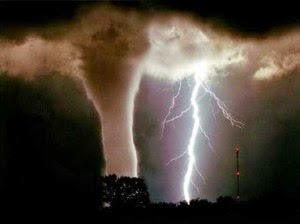


Her entire world comes crashing down while she and Steph are in California again, for Stephania to shoot with Curve Magazine. Maria receives a message from Marisol. Their mother had died. Maria tries desperately to hide her tears from Steph before she goes off to shoot. When she comes back, though, Maria is weeping, and tells her the bad news.


At a time when emotions are at an all time high, and tension is strong, Maria discovers something amazing. Her family did love and accept her all along. Marisol had lied to Maria. She also lied to everyone else in the family. Marisol was the one who could not accept Maria as a lesbian, not their mother. Though Maria's heart was broken that her mother had died, she now had the most beautiful family reunion as well.


Their uncle Guillermo asked Maria to call Marisol to come see him. When Maria does, it becomes a confrontation.


Seeing Marisol get right in Maria's face, Stephania ran outside. She immediately defended Maria, and called Marisol out on her lies. She grabs Marisol by the hair, and says all the things that needed to be said. She defends Maria, their family, and even God. Once again, despite Marisol's distance, Maria's family is connected.


Family had always been important to Maria. She always loved her friends and family deeply. Personal connections were her top priority. Through the highs and lows of life, the trials and triumphs of every day, Maria remained strong and faithful to everyone in her life. She is a strong soul, an incredible woman who gave so much to everyone who knew her. She had love, she had fire, she had compassion, she had fear, she had humor, she had severity inside her. She was a woman of the greatest kind.

Favorite quote from Maria: “There was never anything wrong with you. You are perfect just the way God made you.”


Happy reading!
http://www.amazon.com/Writer-Loving-Her-Book-ebook/dp/B00K6ZEAAU/ref=sr_1_6?ie=UTF8&qid=1428031920&sr=8-6&keywords=lauren+shiro


Thursday, March 7, 2013

On Education

My wife is an educator. More specifically, she teaches learning disabled and emotionally disturbed children. Over the years, her students have run the gamut from autism to anger issues. Last night, we were discussing the state of the educational system.


In New York state, there is standardized testing. Which sounds harmless until you consider the fact that the results of her students' test scores are added in with other students' scores and then we get the state average. How can one of her students, who might be severely learning disabled be compared to a non-LD student?! We all know that they can't. It's not balanced - it's not a fair fight.


Unfortunately, in the end, the students - the children - will be the ones who lose. Neither the average student nor the LD student will get the full education that they need and they will then be thrust into the real world, forced to struggle unequipped.


What does any of thids have to do with writing?


For me, even as a child, education was of the utmost importance. You had better believe that English class was a top priority. I knew the differences between there, their and they're a long time ago. It saddens (and even frustrates) me that my peers - my colleagues - do not know those differences. I look on Facebook and just see such horrible grammar. When I do so, I am appalled.


Now, I am not trying to pass judgment on people. Maybe they didn't pay attention in English. Maybe they had a crappy teacher. Who knows? The point is, they were not properly prepared for "the real world."


You may be asking yourself, "what difference does it make if they use there instead of their?" The differences are: (a) we are not the only English speaking country in the world. The British know their language pretty darn well. I can guarantee you, they just checked to make sure I used the proper "their." (b)As an aside to (a), we look like idiots on the global stage. We are not looked at in a good light by other countries. The fact that we cannot master our own language makes us the laughing stock of the world. (c) Isn't it important to know how to balance a check book? It's a part of our daily lives, right? We speak constantly, right? Words are also a part of our daily lives. Ergo, proper use of our words should also be not just a part of our daily lives, but an important part of our daily lives.


It is for those reasons that I proudly call myself a grammar nazi. I refuse to appear ignorant and inarticulate. I refuse to fall into the stereotype of the ugly, uneducated American. This is our language, but sadly, I have met many people for whom English is their second language and they have mastered it far better than we (the native speakers) have. I have tremendous respect for those people and their native tongues. I also have tremendous respect for my own language.


What's sad is that a key part of this linguistic issue is that teachers aren't able to teach proper grammar because they are overworked, underpaid and forced to follow curriculums set by the government. They have to cram ridiculous amounts of information into shorter time spans. They do not get the opportunity to teach the way they want to teach. They want to teach proper grammar as much as I want to see and hear it. Sadly, they just can't due to these regulations.


We need to master our language and we need to improve our educational system. Both are in a very sad state. I think that if we were able to improve both, we as a nation, would improve. Our global image would improve and our culture would improve as well.


So, here's to better education and better grammar for us all!

Friday, January 25, 2013

Lynda Bailey

Good morning, readers! Today, I am VERY happy and excited to welcome guest and fellow author, Lynda Bailey! :)


Here's a little background on Lynda: "I’ve always loved stories, especially romances. For me the only thing better than reading a romance is writing one. That and drinking red wine while eating dark chocolate. My manuscripts have been finalists in major writing contests, including the 2010 RWA Golden Heart®.


I live in Reno with my husband of thirty years and our two pampered pooches.
"

Linda wrote Battle Born Love which I read & reviewed last week. Again, I definitely recommend you get your hands on it! ;)

So, without further ado, here is Ms. Bailey!


Thanks so much, Lauren, for letting me hang out today!

So, we’re talking about dialogue. In my humble opinion, dialogue is an intricate part of storytelling—of getting the reader into the story— because it’s an extension of the characters’ personalities. Dialogue isn’t something the reader should ever have to think about. It should just…be. It should be an even flow, a give and take of conversation. If the dialogue reads stilted or forced, the reader is probably not going to hang very long with the book.

The first rule to writing believable dialogue is to make sure it jives with whatever time period you’re using in the story. If you’re writing a Regency story or a Civil War saga featuring slaves, you better be on your game with regard to those vernaculars. I got dinged in a review of my historical western romance because the reader felt I used 2012 terminology for a story set in the 1880s. Ouch! The last thing you want as an author is to have your reader yanked from the story.

Maybe that’s why I choose to write contemporary romance. No need to worry about the proper Scottish dialect for me. :) But even with contemporaries, you have to be careful. I personally love to use words like “gonna,”“hafta” and “kinda” in dialogue—Spell/Grammar Check be damned. This is how people talk in real life so it’s how my characters are gonna talk. Think about Morgan Freeman in Driving Miss Daisy. Did he say, “I am trying to take you to the grocery story.”? Uh, no. He said, “I’m tryin’ ta take ya to da store.” Huge difference.

The other thing to keep in mind when writing dialogue is, if your character can say something in five words, have them say it in four. Short, snappy lines makes the reading go faster because more pages are getting turned. It also puts more *white space* on the page. And readers loooooove white space.

As a reader, one of my pet peeves is when the author uses a bunch of he said/she said or he asked/she asked in dialogue. Rather than having Sally say blah, blah, blah, have Sally do something. If she’s upset, have her stomp a foot or glare at the hero. If she’s being coy, have her swish side to side. Shy, maybe she should twist her fingers together. Remember that pesky, yet brilliant advice: show, don’t tell. Don’t tell me who’s talking, but show me by having some action during the dialogue. It helps to solidify the characterizations and makes for a (hopefully) more enjoyable read.

Okay, so I’ve voiced my opinion about dialogue. Do you agree with me or am I barking up the metaphorical tree? Shout out your thoughts and opinions.

Thanks again to Lauren for hosting me today!


Please visit me at www.lyndabailey.net. Or drop me an email Lynda@lyndabailey.net.


Friday, October 26, 2012

The Grammar Nazi Rants

I am a self-proclaimed grammar nazi. I know it, I admit, I own it. It's just a part of who I am.


Yesterday, I received an e-mail from a fellow writer (NOT with VHP). It was an announcement for her newest book release. Like most authors, she's throwing an on-line bash to celebrate. There was a problem, though. What was it? The second line read, "and your invited..."


I shook my head in dismay. Really?! I'm friendly with this gal. I'll admit that I haven't read her work yet, but I'm happy she has a new release. But come on! YOUR invited?! If she genuinely does not understand the difference, I have to question her abilities as a writer.


That's the problem with e-books and self-publishing. I'm not directing this solely at her. There are a TON of people out there who think they can write. They want to write the great American novel. I get that and I respect that dream. I dream of being an amazing artist. However, I don't paint and then sell you something claiming it to be a masterpiece. At the risk of sounding harsh, people need to know their limitations.


What kills me is that things like this are so commonplace now. Music lyrics boast terrible grammar. Text messages have created an entirely new form of shorthand. People will tell you frankly that they don't care about proper grammar. Their, there and they're are all completely interchangeable. You HAVE to use an apostrophe in order to make a word plural (i.e., horse's versus horses).


What's happening? Our language is one of the most difficult to learn. We're actually making it harder. We're also making ourselves look absolutely foolish on the global stage. Other countries are producing wonderful works of literature. Business people don't perform transactions internationally using text shorthand. To others, we appear as uneducated, inarticulate fools. Personally, that offends me. I am anything but. I hate the fact that my country appears as such to others. We're better than that. We need to show everyone that we are.


Call me crazy, but I genuinely believe that true mastery of our language can and will lead to better things for all of us: both indivdiually and as a nation. Let's get back to speaking and writing the English language as it was intended. You never know what could come of it! :)


Happy reading!


Thursday, November 10, 2011

Riding the Wave

Happy Thursday, everyone!


Today, yours truly is in a particularly good mood. Why? Well, because things on the writing front have been going incredibly well. :)


Most importantly, Impeccable has just come out in print! Excited?! Me?! Never! LOL. I don't know whether to dance or simply wet my pants! It is phenomenal! I am so very excited! Please purchase your copy today!


Also, I will be at the Fairport Holiday Author Book Signing in Fairport, NY on Dec. 3. This is an event to celebrate new releases for 2011. You can come meet me, buy my books and get them signed for yourself, or as a holiday gift! The event will be from 2-4 pm. I'd love to see you there!


I've been getting a lot of recognition from the LGBT community as of late, as well.


It is exciting and flattering to have the LGBT community recognize my work. What's especially exciting is that a lot of this recognition comes from overseas. European book stores, organizations and individuals are suddenly paying attention to little old me.


You have to understand that as much as I like to boast about my work, the truth is: I realize that I am not Pulitzer Prize material. I am not even close to being a NY Times best seller (though I desperately wish I was!) For these people to find me, let alone say & do what they are, blows my mind! It's thrilling. It's an honor, really.


Perhaps with Imperfect and now Impeccable, I am becoming the author I have always dreamed of becoming. Yes, I would love to see my books become best sellers, but to see my work impacting and helping the LGBT community is amazing.


That impact is the reason I write. To see it come to fruition is simply phenomenal. For now, I am simply going to ride this wave! ;)


Happy reading!